


Building better money habits is one of the most effective ways to improve your financial life. You do not need to earn a huge income or completely change your lifestyle to become better with money. In many cases, small and consistent habits can have a much bigger impact than occasional big financial decisions.
The way you manage money every day influences how much you save, how much debt you accumulate, and how prepared you are for the future.
Good money habits can help you spend more intentionally, save consistently, avoid unnecessary debt, and make progress toward your financial goals.
The important thing is to focus on habits that are realistic and sustainable. You do not need to become perfect with money overnight. Start with one or two changes, build consistency, and gradually add better habits over time.
In this guide, we will explore practical money habits that can help you take better control of your finances.
What Are Money Habits?
Money habits are the regular behaviors and decisions you make with your finances.
They can include:
- How you spend your income
- How often you save
- Whether you track expenses
- How you use credit
- How you handle debt
- Whether you plan for emergencies
- How you make large purchases
- How you prepare for future goals
Some habits can help you build financial stability, while others can make it harder to reach your goals.
The good news is that financial habits can change.
By becoming more aware of your behavior and creating simple systems, you can gradually develop healthier money habits.
Why Are Good Money Habits Important?
A financial plan is useful, but your daily behavior determines whether you actually follow that plan.
For example, you may create a goal to save $2,000, but if you regularly spend more than you earn, reaching that goal will be difficult.
Good money habits can help you:
- Spend within your income
- Save more consistently
- Reduce unnecessary purchases
- Build an emergency fund
- Avoid unnecessary debt
- Prepare for large expenses
- Reduce financial stress
- Reach long-term financial goals
The key is consistency.
Saving a small amount every month is generally more sustainable than trying to save a huge amount once and then giving up.
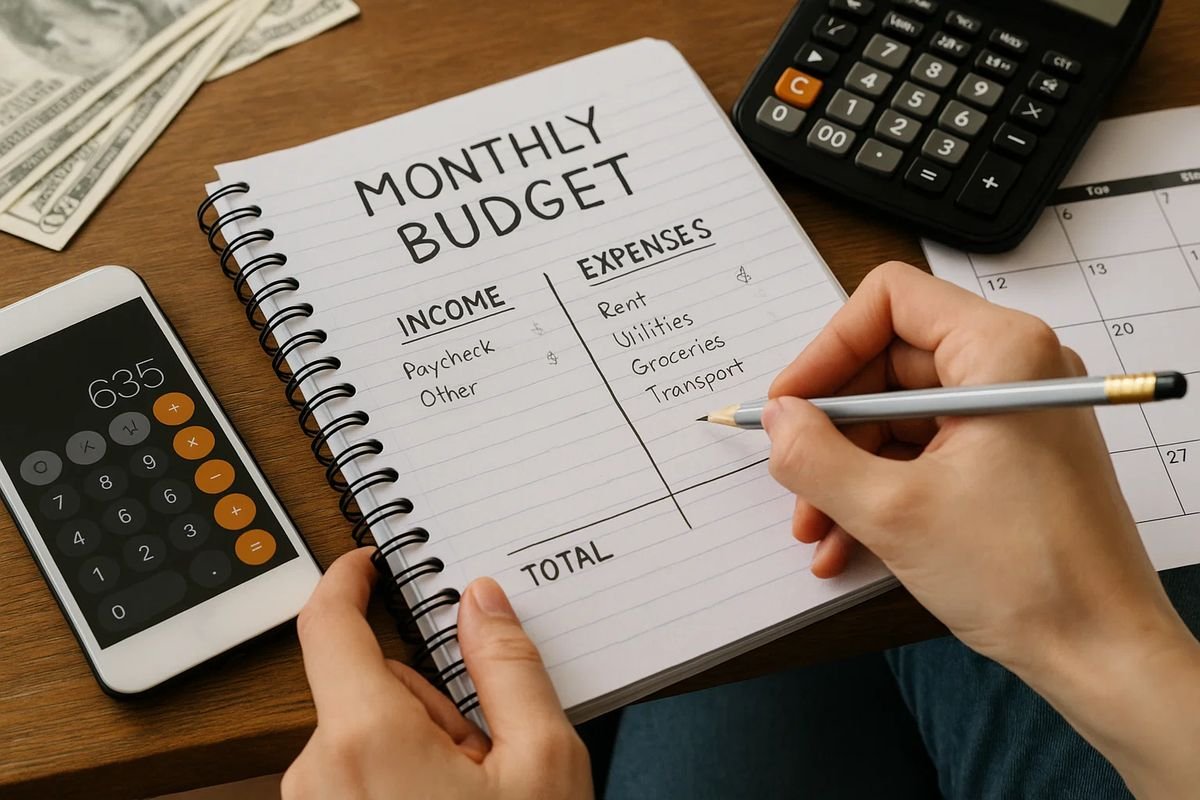
1. Create a Monthly Budget
One of the most important money habits is creating and following a monthly budget.
A budget gives your income a purpose.
Start by listing:
- Monthly income
- Housing costs
- Food
- Transportation
- Utilities
- Debt payments
- Personal expenses
- Entertainment
- Savings
Once you know where your money is going, you can make better decisions.
Your budget does not need to be complicated. A simple spreadsheet or notebook can be enough.
Review your budget at the beginning and end of every month and make adjustments when necessary.
2. Track Your Spending
A budget tells you what you plan to spend, while expense tracking tells you what you actually spend.
Make a habit of recording your purchases.
You can use:
- A budgeting app
- A spreadsheet
- A notebook
- Your bank statements
- A simple notes application
Tracking your spending helps you identify patterns.
For example, you might discover that you are spending much more on food delivery, online shopping, or entertainment than you expected.
Once you know the problem, you can make a plan to change it.
3. Save Money Automatically
One of the easiest ways to build a strong savings habit is to automate it.
Instead of waiting until the end of the month to see what is left, arrange for a specific amount to move into savings regularly.
For example, you could automatically transfer $100 every month.
Automation reduces the number of decisions you need to make.
You are essentially treating savings like another financial responsibility.
Over time, this can turn saving from something you occasionally remember to do into a regular part of your financial routine.
4. Build an Emergency Fund
Unexpected expenses are part of life.
Your car may need repairs. You may have an unexpected medical bill. A household appliance may stop working. Your income could temporarily decrease.
An emergency fund provides a financial safety net for situations like these.
Start with a small target if necessary.
You might first aim for $500 or $1,000 and then gradually build toward several months of essential expenses.
Keep this money separate from your everyday spending when possible so you are less likely to use it for non-emergency purchases.
5. Practice Delayed Gratification
One powerful money habit is learning to wait before making non-essential purchases.
Instead of immediately buying something you want, give yourself time to think.
For smaller purchases, try waiting 24 hours.
For expensive purchases, consider waiting several days or even weeks.
Ask yourself:
- Do I really need this?
- Can I afford it?
- Is there a cheaper alternative?
- Will I still want it later?
- Does this purchase support my financial goals?
Waiting can reduce impulse spending and help you make more thoughtful decisions.
6. Avoid Spending More Just Because You Earn More
When your income increases, it can be tempting to immediately increase your lifestyle.
You may upgrade your car, move into a more expensive home, eat out more often, or buy more expensive products.
This is known as lifestyle inflation.
Some lifestyle improvements are perfectly reasonable, but increasing every expense at the same rate as your income can prevent you from building wealth.
When your income increases, consider directing part of the additional money toward:
- Savings
- Emergency funds
- Debt repayment
- Investments
- Long-term goals
This allows your financial position to improve along with your income.
7. Make Saving a Priority
Many people save whatever money remains after spending.
A better approach is to make savings one of your planned expenses.
For example, if you earn $3,000 per month, you could decide that $300 will go toward savings before you allocate money to optional spending.
The exact amount depends on your circumstances.
The important thing is to make saving intentional.
Even if you can only save a small amount, developing the habit is valuable.
8. Be Careful With Credit Cards
Credit cards can be useful financial tools when used responsibly, but they can also make overspending easier.
Avoid treating available credit as extra income.
Before using a credit card, make sure you understand how and when you will repay the balance.
If possible, avoid carrying expensive revolving balances and always pay attention to interest charges and fees.
A good rule is to use credit for purchases you can realistically afford rather than using it to maintain a lifestyle beyond your income.
9. Pay Bills on Time
Late payments can result in fees, penalties, and other financial problems.
Make paying important bills on time a regular habit.
You can use:
- Automatic payments
- Calendar reminders
- Banking alerts
- A monthly bill checklist
Organize your bills so you know when each payment is due.
Automating recurring bills can reduce the chance of forgetting them, although you should still monitor your account to make sure sufficient funds are available.
10. Review Your Subscriptions Regularly
Subscriptions are easy to forget because they may be relatively small monthly charges.
Over time, however, several subscriptions can become a significant expense.
Every few months, review your subscriptions.
Ask:
- Do I still use this service?
- Is there a cheaper plan?
- Do I have overlapping services?
- Is the subscription helping me reach my goals?
Canceling services you rarely use can free up money for savings or more important expenses.
11. Set Financial Goals
Good money habits become easier when you have something specific to work toward.
Create short-term, medium-term, and long-term goals.
Short-Term Goals
These might include:
- Building a $500 emergency fund
- Paying a small bill
- Saving for a purchase
Medium-Term Goals
Examples include:
- Buying a car
- Paying off debt
- Saving for education
- Building a larger emergency fund
Long-Term Goals
These might include:
- Buying a home
- Retirement
- Building investments
- Starting a business
Write down your goals and give them specific amounts and target dates when possible.
12. Have a Weekly Money Check-In
You do not need to spend hours managing your finances.
Set aside 10–15 minutes each week to review your money.
Check:
- Current account balances
- Recent spending
- Upcoming bills
- Savings progress
- Credit card balances
- Budget categories
This simple habit can help you stay aware of your financial situation.
It also allows you to catch problems before they become larger.
13. Learn to Say No to Unnecessary Spending
Social pressure can influence spending decisions.
Friends or family members may encourage you to eat out, travel, shop, or spend money on activities you did not plan for.
It is okay to say no when something does not fit your budget.
You can still enjoy time with others by choosing lower-cost activities.
Protecting your financial goals does not mean you have to avoid having fun. It simply means making choices that fit your priorities.
14. Compare Before Making Large Purchases
For expensive purchases, avoid buying immediately.
Research the product or service and compare your options.
Consider:
- Price
- Quality
- Warranty
- Maintenance costs
- Long-term value
- Alternative products
A few minutes of research can sometimes prevent an expensive mistake.
The goal is not always to buy the cheapest option. It is to make sure the purchase provides enough value for the money you spend.
15. Take Care of What You Already Own
A powerful way to save money is to take better care of the things you already have.
Regular maintenance can help extend the life of:
- Cars
- Electronics
- Appliances
- Clothing
- Furniture
- Tools
Replacing items frequently can become expensive.
Proper maintenance may help reduce unnecessary replacement costs and protect the value of your purchases.
16. Use Extra Money Wisely
Occasionally, you may receive money outside your normal income.
This might include:
- A bonus
- A gift
- A tax refund
- A freelance payment
- Money from selling unused items
Instead of spending all of it immediately, consider dividing it.
For example, you could use part for something enjoyable and direct the rest toward savings or debt repayment.
This allows you to enjoy unexpected money without losing the opportunity to improve your financial position.
17. Focus on Progress, Not Perfection
One of the biggest mistakes people make when changing financial habits is expecting immediate perfection.
You may overspend one month.
You may forget to save.
You may make an unnecessary purchase.
That does not mean your financial plan has failed.
Instead, look at what happened, identify the reason, and make a better decision next time.
Financial improvement is a long-term process.
Consistency matters more than perfection.
A Simple 30-Day Money Habit Challenge
If you want to start improving your financial habits, try this simple 30-day approach.
Week 1: Track Everything
Record every purchase you make.
Do not worry about changing your spending yet. Focus on understanding your habits.
Week 2: Reduce One Expense
Choose one unnecessary expense and reduce or eliminate it.
For example, you might reduce restaurant meals or cancel an unused subscription.
Week 3: Automate Savings
Set up a regular transfer into your savings account.
Choose an amount that fits comfortably within your budget.
Week 4: Review Your Progress
Look at what you learned during the month.
Ask:
- Where did I spend too much?
- What did I successfully reduce?
- How much did I save?
- Which habit should I continue?
Then create a plan for the following month.
Common Money Habits to Avoid
Spending More Than You Earn
Consistently spending more than your income can lead to debt and financial stress.
Ignoring Your Bank Statements
Review your transactions regularly so you know where your money is going.
Using Credit for Everything
Credit should not become a substitute for having enough income to cover your expenses.
Saving Only When Convenient
Saving should be a regular habit rather than something you do only when extra money appears.
Making Emotional Purchases
Avoid using shopping as a response to stress, boredom, or frustration.
Ignoring Small Expenses
Small recurring expenses can become surprisingly large over time.
Final Thoughts
Building better money habits does not require a complete financial transformation overnight.
Start with simple actions.
Create a monthly budget. Track your expenses. Automate your savings. Build an emergency fund. Think before making non-essential purchases. Review your subscriptions and set clear financial goals.
Most importantly, make these behaviors consistent.
Your financial future is influenced not only by how much money you earn but also by how you manage the money you already have.
A small amount saved every month, a few unnecessary purchases avoided, and regular financial check-ins can gradually create significant improvements.
The goal is not to stop enjoying your money. The goal is to use it intentionally.
When good financial habits become part of your everyday routine, managing money becomes easier and less stressful. Over time, these habits can help you build savings, reduce debt, prepare for unexpected expenses, and move closer to the financial future you want.
Frequently Asked Questions
What is the best money habit to start with?
Tracking your spending is a great starting point because it shows you exactly where your money is going. Once you understand your spending, you can make better decisions.
How can I develop better saving habits?
Set a specific savings goal and automate regular transfers into a separate savings account. Starting with a small amount can make the habit easier to maintain.
How long does it take to build a money habit?
There is no exact amount of time that works for everyone. The important factor is consistent repetition. Start with one manageable habit and practice it regularly.
Should I stop spending money on things I enjoy?
No. A healthy financial plan should include reasonable spending for entertainment and personal enjoyment. The goal is balance, not eliminating all discretionary spending.
How can I stop impulse buying?
Try waiting 24 hours before making non-essential purchases. Remove saved payment information, create shopping lists, and set a monthly spending limit for discretionary purchases.
What should I do if I make a financial mistake?
Do not let one mistake stop your progress. Review what happened, learn from it, adjust your plan, and continue working toward your goals.






Leave a Reply