

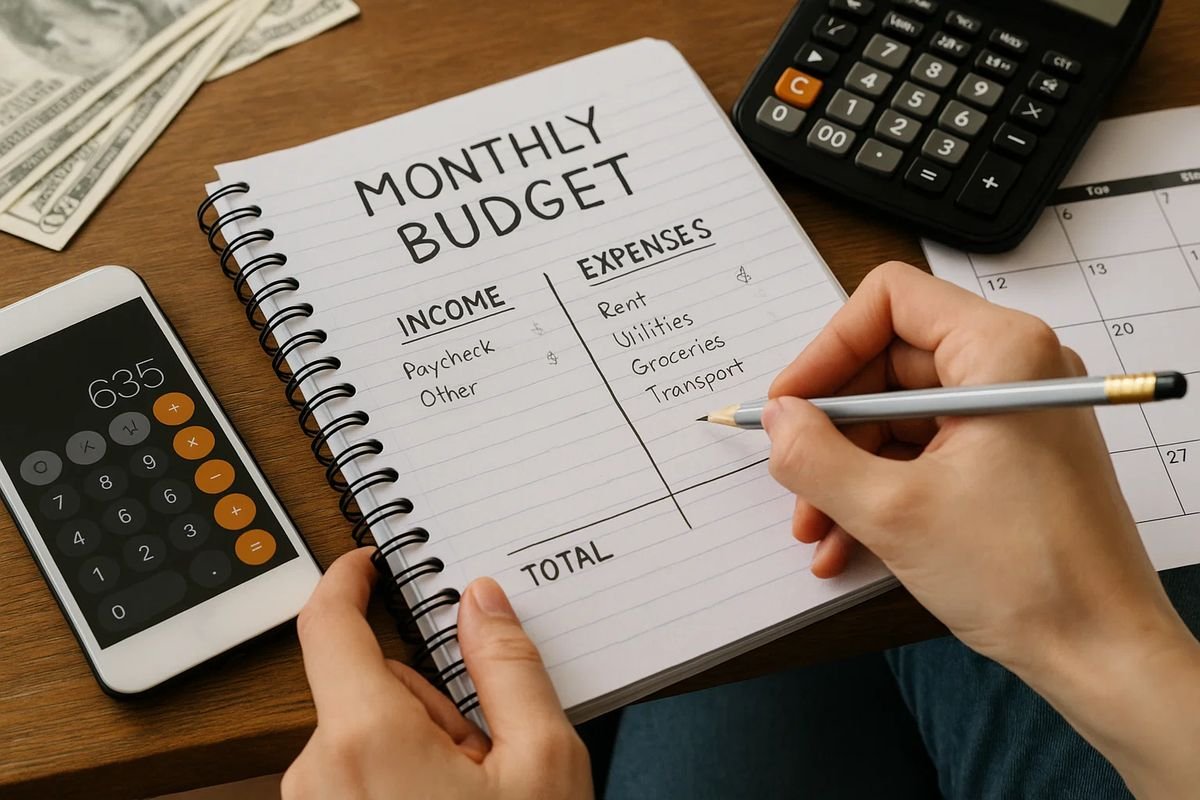
Creating a monthly budget is one of the simplest ways to take control of your money. Whether you earn a regular salary, work as a freelancer, run a small business, or have an irregular income, a budget can help you understand where your money goes and how much you can save.
Many people think budgeting means giving up everything they enjoy. In reality, a good budget is not about restricting your life. It is about making a clear plan for your money so you can pay your bills, save for the future, handle unexpected expenses, and still spend on things you enjoy.
In this guide, you will learn how to create a monthly budget step by step, how to track your expenses, and how to avoid common budgeting mistakes.
What Is a Monthly Budget?
A monthly budget is a plan that shows how much money you expect to receive during a month and how you plan to spend or save it.
A simple budget has three main parts:
- Income: Money you receive during the month.
- Expenses: Money you spend on bills, food, transportation, shopping, and other needs.
- Savings: Money you keep for future goals or emergencies.
The basic idea is simple:
Income – Expenses – Savings = Money Remaining
A budget allows you to make decisions before you spend your money instead of wondering where your money went at the end of the month.
Why Is a Monthly Budget Important?
Without a budget, it can be easy to spend more than you realize. Small purchases may not seem important individually, but they can add up significantly over an entire month.
A monthly budget can help you:
- Control unnecessary spending
- Build an emergency fund
- Save for future goals
- Pay bills on time
- Reduce financial stress
- Avoid unnecessary debt
- Understand your spending habits
- Prepare for unexpected expenses
For example, if you earn $2,500 per month but spend $2,600, you are effectively spending more than you earn. A budget can help you identify where the extra $100 is going and make adjustments before the situation becomes a problem.
Step 1: Calculate Your Monthly Income
The first step in creating a budget is knowing exactly how much money you have available.
If you receive a regular monthly salary, this step may be straightforward. However, if you are self-employed, freelance, or have multiple sources of income, you may need to calculate an average.
Your monthly income may include:
- Salary
- Freelance income
- Business income
- Side-job income
- Rental income
- Investment income
- Other regular payments
If your income changes from month to month, consider creating your budget using a conservative income estimate. This can help prevent you from planning expenses based on money you may not actually receive.
Step 2: List Your Fixed Expenses
Fixed expenses are costs that generally stay the same each month.
Common examples include:
- Rent or mortgage
- Loan payments
- Insurance
- Internet bills
- Phone plans
- Subscription services
- School or tuition payments
Write down each fixed expense and its monthly amount.
For example:
| Expense | Monthly Cost |
|---|---|
| Rent | $700 |
| Internet | $50 |
| Phone | $40 |
| Loan Payment | $200 |
| Insurance | $100 |
Total Fixed Expenses: $1,090
Knowing your fixed expenses gives you a better understanding of how much of your income is already committed.
Step 3: Track Your Variable Expenses
Variable expenses are costs that can change from month to month.
These may include:
- Groceries
- Electricity
- Transportation
- Fuel
- Dining out
- Entertainment
- Clothing
- Shopping
- Personal care
Variable expenses are often the easiest place to make changes when you need to save more money.
For example, you may not be able to immediately reduce your rent, but you may be able to reduce restaurant spending or unnecessary online purchases.
The key is to track your actual spending rather than guessing.
Step 4: Separate Needs From Wants
One of the most useful budgeting habits is learning the difference between needs and wants.
Needs are expenses that are important for your basic life and responsibilities. These can include:
- Housing
- Basic food
- Utilities
- Transportation
- Healthcare
- Essential bills
Wants are things that make life more enjoyable but are not essential.
Examples include:
- Restaurant meals
- Expensive clothing
- Entertainment
- Premium subscriptions
- New gadgets
- Luxury purchases
This does not mean you should eliminate all wants. Instead, give them a specific place in your budget.
A healthy budget should allow you to enjoy your money while keeping your financial goals on track.
Step 5: Set a Savings Goal
Saving should not be something you do only when you have money left over.
Instead, make savings part of your monthly budget.
You might create separate goals for:
- Emergency savings
- Vacation
- New car
- Home purchase
- Education
- Retirement
- Business investment
- Large future purchases
Even a small amount saved consistently can become meaningful over time.
For example, saving $100 per month means you could save $1,200 over a year, before considering any interest or investment growth.
If possible, automate your savings by transferring money to a separate savings account shortly after receiving your income.
Step 6: Choose a Budgeting Method
There are several ways to organize a monthly budget.
The 50/30/20 Rule
One popular approach is the 50/30/20 budgeting method.
Under this method:
- 50% goes toward needs
- 30% goes toward wants
- 20% goes toward savings and debt repayment
For someone earning $3,000 per month, the basic structure could look like:
- Needs: $1,500
- Wants: $900
- Savings/debt: $600
However, these percentages are not strict rules. Your ideal budget depends on your income, location, family situation, debts, and financial goals.
Someone with high housing costs may need to spend more than 50% on needs. Someone focused on paying off debt may choose to reduce spending on wants and increase debt payments.
The best budget is one that is realistic for your situation.
Step 7: Create a Simple Monthly Budget
Now combine your income, expenses, and savings into one plan.
For example, imagine your monthly income is $3,000.
Your budget might look like this:
| Category | Amount |
|---|---|
| Housing | $800 |
| Groceries | $350 |
| Utilities | $150 |
| Transportation | $200 |
| Insurance | $100 |
| Debt Payments | $200 |
| Entertainment | $150 |
| Shopping | $100 |
| Savings | $500 |
| Other Expenses | $150 |
This example gives you a clear picture of where your money is going.
You can adjust each category according to your personal situation.
Step 8: Track Your Spending During the Month
Creating a budget is only the beginning. You also need to track your spending.
At the end of each day or week, record what you spent.
You can use:
- A spreadsheet
- A budgeting app
- A notebook
- Your bank’s transaction history
- A simple notes app
For example, if your monthly dining-out budget is $150 and you have already spent $120 by the middle of the month, you know you need to be careful with restaurant spending for the remaining days.
Tracking your expenses helps you stay aware of your financial decisions.
Step 9: Review Your Budget at the End of the Month
At the end of each month, compare your planned budget with your actual spending.
Ask yourself:
- Did I spend more than expected?
- Which category went over budget?
- Where did I spend less?
- Did I reach my savings goal?
- Were there unexpected expenses?
- What should I change next month?
Do not treat going over budget as a failure.
A budget is a tool, not a punishment. If a category consistently costs more than expected, your original estimate may simply be unrealistic.
Adjust it and try again.
Common Monthly Budgeting Mistakes
1. Forgetting Irregular Expenses
Some expenses do not happen every month, such as annual insurance payments, vehicle repairs, gifts, or holiday spending.
Consider creating a separate fund for these expenses and contributing a small amount each month.
2. Making the Budget Too Strict
A budget that leaves no money for entertainment or personal spending can be difficult to maintain.
Give yourself a reasonable amount for things you enjoy.
3. Ignoring Small Purchases
A $5 or $10 purchase may seem insignificant, but repeated small purchases can become hundreds of dollars over a month.
Track everything, especially if you are trying to reduce spending.
4. Not Updating the Budget
Your financial situation can change.
Your rent may increase, your income may change, or you may have new expenses.
Review your budget regularly and update it when necessary.
5. Treating Savings as Optional
If saving is always the last priority, it may never happen.
Include savings as a planned expense in your monthly budget.
Tips to Make Budgeting Easier
Here are some simple habits that can make budgeting easier:
Automate your bills: Set up automatic payments where appropriate so you do not forget important due dates.
Automate savings: Transfer a set amount to savings regularly.
Use separate accounts: Keeping spending and savings separate can make it easier to avoid spending money intended for future goals.
Set spending limits: Give yourself realistic limits for shopping, dining, and entertainment.
Review subscriptions: Cancel services you rarely use.
Plan before shopping: Make a list before going to the store and avoid unnecessary impulse purchases.
Build an emergency fund: Aim to gradually create savings that can cover unexpected expenses.
How Much Should You Save Each Month?
There is no single amount that works for everyone.
If possible, start with an amount that is realistic for your income and expenses. Even if you can only save a small amount initially, consistency is more important than perfection.
As your income increases or your expenses decrease, consider increasing your savings rate.
The important thing is to develop the habit of paying yourself first.
Final Thoughts
Creating a monthly budget does not have to be complicated. Start by calculating your income, listing your expenses, separating needs from wants, setting savings goals, and tracking your spending.
The goal is not to create a perfect budget. The goal is to create a financial system that helps you make better decisions consistently.
Your first budget may not work perfectly, and that is completely normal. Review it at the end of each month, identify what worked and what did not, and make adjustments.
Over time, budgeting can become a simple financial habit that helps you save more, spend with confidence, prepare for unexpected expenses, and work toward your long-term financial goals.
Frequently Asked Questions
What is the easiest way to create a monthly budget?
Start by writing down your monthly income and all major expenses. Then divide your expenses into categories such as housing, food, transportation, bills, entertainment, debt, and savings.
How much money should I save every month?
The right amount depends on your income and expenses. A common guideline is to work toward saving around 20% of your income, but starting with a smaller amount is perfectly reasonable if your budget is tight.
Should I use a budgeting app?
A budgeting app can be useful, but it is not required. A spreadsheet, notebook, or simple list can work just as well if you consistently track your income and expenses.
What should I do if I spend more than my budget?
Do not panic. Review the category where you overspent and determine why. You may need to reduce another category, adjust your budget, or look for ways to reduce the expense in the future.
Is budgeting only for people with low incomes?
No. Budgeting can benefit people at almost any income level. The more money you earn, the more important it can become to have a clear plan for spending, saving, investing, and achieving financial goals.







Leave a Reply