

Choosing the right type of bank account can make managing your money much easier. Two of the most common types of personal bank accounts are checking accounts and savings accounts.
Although both accounts allow you to keep money with a bank, they are designed for different purposes. A checking account is generally intended for everyday transactions, while a savings account is designed to help you set money aside for future needs.
Understanding the differences between these accounts can help you decide where to keep your everyday spending money and where to store money you want to save.
In this guide, we will explain checking and savings accounts, compare their features, discuss their advantages and disadvantages, and help you understand when each type of account may be useful.
What Is a Checking Account?
A checking account is a bank account designed primarily for everyday financial transactions.
Depending on the bank and country, it may also be called a current account.
You can typically use a checking account to:
- Receive your salary or income
- Pay bills
- Make purchases
- Transfer money
- Withdraw cash
- Use a debit card
- Set up automatic payments
The main advantage of a checking account is convenient access to your money.
If you regularly need to spend money, transfer funds, or pay bills, a checking account can be useful for managing those transactions.
What Is a Savings Account?
A savings account is designed primarily for storing money that you do not need to spend immediately.
Savings accounts may pay interest on the money you keep in the account, although rates and terms vary between financial institutions and account types.
A savings account can be useful for:
- Emergency funds
- Future purchases
- Vacation savings
- Education expenses
- Short-term financial goals
- General savings
The idea is to keep money separate from your everyday spending so that you are less tempted to use it unnecessarily.
Checking vs. Savings Accounts: The Main Difference
The biggest difference is their intended purpose.
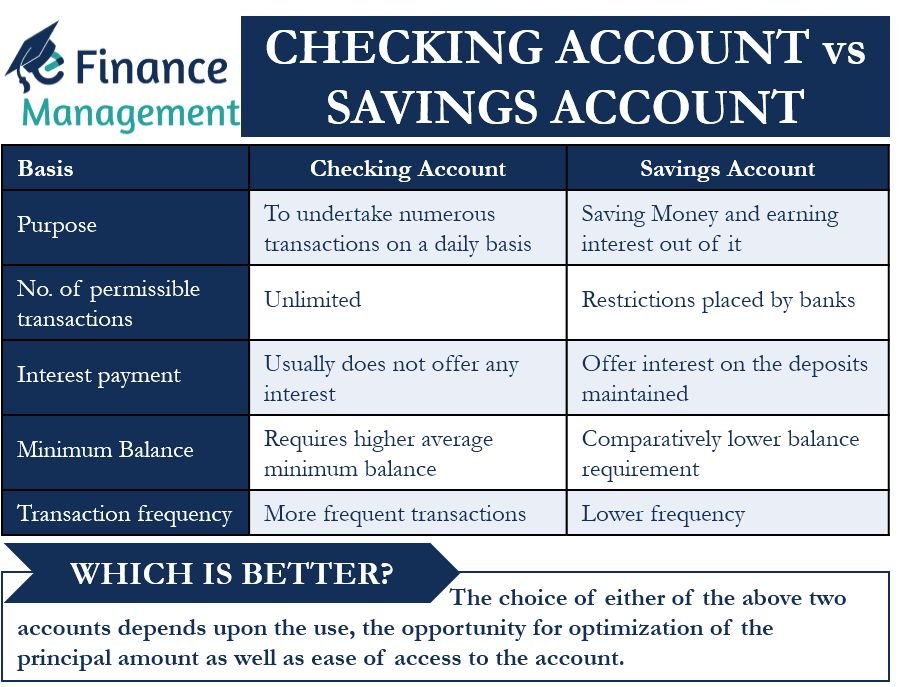
Checking account: Designed for frequent everyday transactions.
Savings account: Designed for storing money and building savings.
For example, you might use a checking account to pay your monthly bills and buy groceries, while keeping your emergency fund in a savings account.
This separation can make it easier to organize your finances.
Key Differences at a Glance
| Feature | Checking Account | Savings Account |
|---|---|---|
| Main Purpose | Everyday spending | Saving money |
| Frequent Transactions | Usually suitable | May have restrictions depending on account |
| Debit Card | Common | May or may not be available |
| Bill Payments | Common | Usually not the primary purpose |
| Interest | Often low or none | May earn interest |
| ATM Access | Usually available | May be available |
| Best For | Regular expenses | Future goals and emergency funds |
The exact features vary by bank and country, so always check the specific account terms.
When Should You Use a Checking Account?
A checking account is generally useful for money that you expect to spend regularly.
For example, your monthly income could be deposited into your checking account.
From there, you could use the account to pay:
- Rent or mortgage
- Utility bills
- Groceries
- Transportation
- Phone bills
- Insurance
- Other regular expenses
You may also use the account for debit card purchases and money transfers.
The main benefit is accessibility.
You can usually access your money without needing to move it from another account first.
When Should You Use a Savings Account?
A savings account is generally more suitable for money you want to keep for future use.
For example, you could use a savings account for:
- Emergency savings
- A new car
- A vacation
- Education
- A home deposit
- Unexpected expenses
Keeping savings separate from your everyday spending account can make it easier to avoid accidentally spending money intended for a future goal.
Why Keep Both Accounts?
Many people find it useful to have both types of accounts.
For example:
Checking account: $2,000 for monthly expenses and bills.
Savings account: $5,000 for emergencies and future goals.
This creates a clear separation between money you plan to spend and money you plan to keep.
It can also make budgeting easier.
When your paycheck arrives, you might leave the amount needed for regular expenses in your checking account and transfer a planned amount to savings.
Interest Rates and Savings Accounts
One of the major differences between checking and savings accounts is the potential to earn interest.
Savings accounts may pay interest based on the balance you maintain.
For example, if you keep $5,000 in an account that pays interest, the bank may pay you a return based on the account’s stated rate and terms.
Checking accounts may offer little or no interest, depending on the financial institution and product.
However, interest should not be the only factor you consider.
A savings account with a higher rate may also have conditions such as:
- Minimum balance requirements
- Withdrawal restrictions
- Limited transactions
- Promotional rates
- Eligibility requirements
Always review the complete account terms.
What Are the Advantages of a Checking Account?
Checking accounts offer several advantages.
Easy Access to Money
You can generally access your funds for everyday purchases and payments.
Convenient Bill Payments
You can use the account to pay regular bills and recurring expenses.
Debit Card Access
Many checking accounts include a debit card for purchases and ATM withdrawals.
Direct Deposits
Employers and other organizations may be able to deposit money directly into your account.
Easy Transfers
Checking accounts are often designed to support frequent transfers and transactions.
What Are the Disadvantages of a Checking Account?
Checking accounts can also have drawbacks.
Possible Fees
Some accounts charge monthly maintenance, ATM, transfer, or other fees.
Low Interest
Some checking accounts offer little or no interest on balances.
Easy Access Can Encourage Spending
Because the money is readily available, it may be easier to spend savings if you keep everything in one account.
This is one reason separate savings can be useful.
What Are the Advantages of a Savings Account?
Encourages Saving
Keeping money separate from everyday spending can help you stay focused on your financial goals.
Potential Interest Earnings
Many savings accounts pay interest, allowing your balance to grow over time.
Useful for Emergency Funds
A savings account can be a convenient place to keep money for unexpected expenses.
Helps Separate Financial Goals
You can use savings accounts to organize money for specific goals, depending on what your bank offers.
What Are the Disadvantages of a Savings Account?
Possible Withdrawal Restrictions
Some savings products may limit certain types or numbers of withdrawals or transfers.
Fees May Apply
Some accounts require minimum balances or charge fees under certain conditions.
Interest Rates Can Change
Depending on the type of account and banking market, interest rates may change over time.
Always check the current terms rather than assuming a rate will remain the same.
Can You Have Both a Checking and Savings Account?
Yes. In many cases, having both can be a practical way to organize your finances.
You could use your checking account for:
- Salary deposits
- Monthly bills
- Daily purchases
- Transportation
- Food
- Regular payments
And use your savings account for:
- Emergency funds
- Future purchases
- Financial goals
- Money you do not need immediately
This system creates a simple division between spending and saving.
How to Transfer Money Between the Accounts
If your checking and savings accounts are at the same bank, transferring money may be relatively simple through online or mobile banking.
For example, after receiving your monthly income, you could transfer a predetermined amount into savings.
Imagine you receive $3,000.
You might allocate:
- $2,300 to checking for monthly expenses
- $500 to savings
- $200 to another financial goal
The exact amounts depend on your personal budget.
The important idea is to give each portion of your income a purpose.
Which Account Is Better for an Emergency Fund?
A savings account is generally more suitable for an emergency fund because the money is kept separate from everyday spending and may earn interest.
However, an emergency fund should also be accessible when a genuine emergency occurs.
Before choosing an account, check withdrawal rules, access methods, fees, and other conditions.
You want the money to be reasonably accessible without making it too easy to spend on non-essential purchases.
Which Account Is Better for Everyday Spending?
A checking or current account is generally more suitable for everyday spending.
It is designed to support frequent transactions such as:
- Shopping
- Bill payments
- Transfers
- Debit card purchases
- Cash withdrawals
Keeping everyday spending money in a checking account can make it easier to manage your monthly budget.
Should You Keep All Your Money in One Account?
You can, but separating your money may make financial management easier.
If everything is in one account, it can be difficult to know how much money is actually available for spending.
For example, imagine your account shows $6,000.
You might think you have plenty of money to spend, but perhaps $3,000 is actually intended for an emergency fund.
By keeping the $3,000 in a separate savings account, you create a clearer picture of your available spending money.
Common Mistakes to Avoid
Using Your Savings for Everyday Purchases
Try to keep savings reserved for their intended purpose.
Ignoring Account Fees
Fees can reduce your savings over time.
Keeping Too Much in a Low-Interest Account
If you have money that you do not need for everyday spending, review whether your current account is appropriate for that purpose.
Not Checking Withdrawal Rules
Understand how easily you can access your savings before choosing an account.
Failing to Set Savings Goals
Simply having a savings account does not guarantee that you will save. Set clear targets and automate contributions when possible.
A Simple Example
Imagine Sarah earns $3,500 per month.
She uses her checking account for:
- Rent
- Groceries
- Transportation
- Utility bills
- Shopping
- Entertainment
Each month, she transfers $500 to her savings account.
Her savings account is used for:
- Emergency savings
- Future travel
- Large purchases
This system helps Sarah know how much money is available for everyday spending and how much is being reserved for the future.
If she sees $2,200 available in her checking account, she knows that her separate savings are not part of her everyday spending money.
How to Choose Between the Two
You do not necessarily have to choose only one.
Ask yourself what the money is for.
If you need frequent access: A checking or current account may be appropriate.
If you want to save: A savings account may be more suitable.
If you need both: Consider using both accounts together.
The right setup depends on your income, spending habits, financial goals, and the account terms offered by your bank.
Final Thoughts
Checking and savings accounts serve different purposes, but they can work together to create a simple financial system.
A checking account is generally useful for everyday spending, bill payments, transfers, and regular transactions. A savings account is generally better suited for money you want to keep for future needs and may provide interest on your balance.
For many people, using both accounts can make budgeting and saving easier.
The key is to understand the fees, interest rates, withdrawal rules, minimum balance requirements, and other conditions before opening an account.
Instead of choosing an account simply because it is popular or advertised heavily, think about how you actually use your money.
When your banking setup matches your financial goals, managing your money can become simpler, more organized, and more effective.
Frequently Asked Questions
What is the main difference between checking and savings accounts?
A checking account is generally designed for everyday transactions, while a savings account is designed to hold money for future use and may pay interest.
Can I have a checking and savings account at the same time?
Yes. Many people use a checking account for everyday expenses and a savings account for emergency funds and financial goals.
Does a checking account earn interest?
Some checking accounts may offer interest, but many traditional checking accounts offer little or no interest. Check the specific account terms.
Is it better to keep an emergency fund in savings?
A savings account can be a suitable place for an emergency fund because it separates the money from everyday spending and may earn interest. Check access and withdrawal conditions before choosing an account.
Can I transfer money from savings to checking?
In many cases, yes, but the process and any limits depend on the bank and account terms.
How much money should I keep in my checking account?
Keep enough to cover your expected bills, regular expenses, and a reasonable buffer. The exact amount depends on your income, spending schedule, and financial situation.






Leave a Reply